Canada | Report: Mehboob Ali Shaikh
With the start of the FIFA World Cup 2026, excitement among football fans around the world has reached new heights. However, cybercriminals are now exploiting that same enthusiasm and urgency for their own gain.
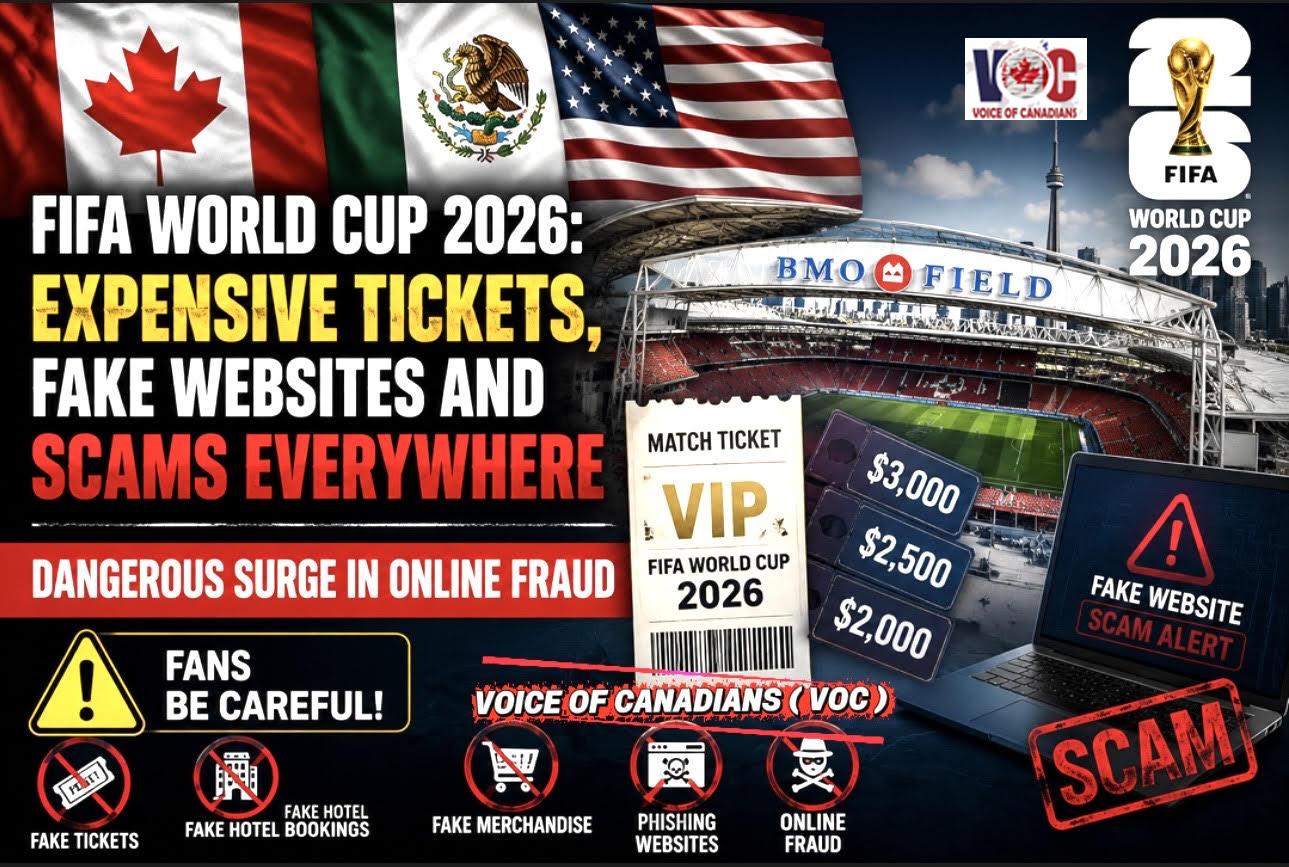
Cybersecurity experts and consumer protection organizations have warned that there has been a significant increase in online scams, fake tickets, fraudulent websites, and deceptive social media schemes linked to the World Cup.
According to experts, millions of football fans are currently potential targets of online fraud.
How Are These Scams Being Carried Out?
Reports suggest that fraud groups are targeting fans through multiple methods, including:
- Fake FIFA ticket websites
- Fraudulent hotel booking offers
- Fake short-term rental advertisements
- Scam travel agencies
- Counterfeit FIFA merchandise
- Misleading social media promotions
- Fake job opportunities and exclusive offers
Scammers often pressure users into making quick decisions using messages such as “limited-time offer,” “exclusive discount,” or “last few tickets available.”
What Is the Real Goal of Fraudsters?
Experts say these scams generally have two main objectives:
First: Directly stealing money from consumers
Second: Collecting personal information, credit card details, and identity data for identity theft
Many fake websites appear highly professional and closely resemble legitimate platforms, making it difficult for users to detect fraud.
Expensive Tickets, High Demand, and an Opportunity for Scammers
Global events like the FIFA World Cup often create strong demand and limited ticket availability, encouraging fans to search for alternative purchasing options.
Reports indicate that some tickets have reached prices of thousands of Canadian dollars, while resale market prices have also remained extremely high.
Cybersecurity experts warn that such conditions create ideal opportunities for scammers to launch fake ticket platforms and exploit consumers.
Social Media Ads Are Not Always Safe
Experts caution that not every advertisement or promotional post appearing on social media can be trusted.
Some fake promotions falsely claim:
- Limited World Cup tickets are available
- Official merchandise is being sold at special discounts
- FIFA-related job opportunities exist
In reality, these links may redirect users to fraudulent websites designed to steal financial and personal information.
Appearing at the Top of Search Results Does Not Guarantee Trust
Cybersecurity specialists say one common misconception is that users automatically trust websites appearing at the top of search engine results.
In reality, fraudulent websites can purchase advertisements to appear in prominent positions.
For that reason, ranking highly in search results should never be treated as proof of legitimacy.
What Should You Do If You Become a Victim?
Toronto Police are encouraging anyone who experiences online ticket fraud or World Cup-related cybercrime to report it immediately.
Experts say timely reporting can:
- Reduce financial losses
- Help shut down fraudulent accounts
- Protect other consumers from becoming victims
Key Safety Tips from Experts
 Use only official and verified platforms Avoid clicking unknown links Carefully check website URLs Verify businesses before making payments Avoid rushed purchasing decisions Do not unnecessarily share credit card or personal information Be cautious of unusually cheap deals or extreme discounts
Voice of Canadians (VOC) — Final Message
The FIFA World Cup is one of the world’s biggest sporting celebrations—but excitement without caution can lead to financial loss and online fraud.
Experts say that one safe click can protect thousands of dollars and valuable personal information.