
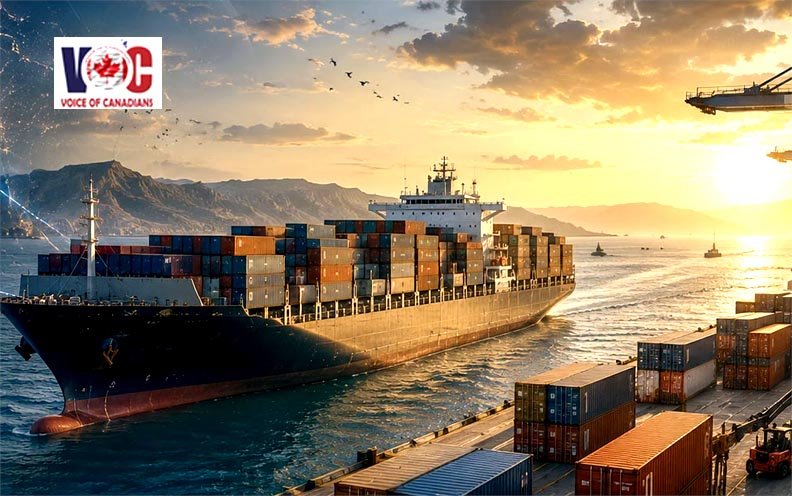
At a time when the world is tense and the Middle East crisis has disrupted the flow of ships through the Strait of Hormuz and Bab el-Mandeb, Gwadar Port is emerging as an alternative for global shipping lines.
This has created a fresh opportunity for Gwadar Port to do more business by demonstrating its capacity to handle cargo efficiently. Geographically close to both chokepoints, Gwadar has offered commercial and logistics companies an alternative transhipment hub.
Located on the Arabian Sea, less than 400km from the Strait of Hormuz, Gwadar Port has seen an upward trend in transit traffic over the last four months.
According to data from the Gwadar Port Authority (GPA), the port handled a record 11,000 containers in April, a substantial increase over its performance throughout 2025. During the entire year of 2025, Gwadar Port processed around 8,300 containers, while fewer than 20 vessels docked at the port.
The momentum continued in May, when Gwadar Port handled more than 53,277 metric tonnes of cargo, another major operational milestone and a reflection of the port’s expanding role in regional and international maritime trade.One significant operation during the month involved the Chinese vessel MV B Jia Shan, which berthed at Gwadar Port carrying nearly 20,669 tonnes of steel billets for onward shipment to Sohar Port in Oman.
Officials said the successful berthing and cargo handling of the vessel, which had a draft of 12.8 metres, demonstrated Gwadar Port’s capacity to accommodate larger international cargo ships.
Another transhipment vessel, MV Show Long, also anchored at Gwadar Port in May. According to GPA Shabbir Ahmed, who spoke to Geo.tv, the vessel was carrying 16,077 metric tonnes of transhipment cargo, including more than 13,000 packages of Chinese-manufactured industrial equipment and pipes.
The cargo was originally destined for Kuwait but was diverted to Gwadar amid the prevailing maritime situation in the Strait of Hormuz, providing another example of the port’s potential as an alternative logistics and transhipment route.
Gwadar Port achieved another milestone in June with the successful berthing of the second Afghan Transit Trade vessel under the revised transit trade framework.
The operation followed the arrival of MV Beyond 2 on February 4, 2025, the first vessel to dock under the revised Afghan Transit Trade arrangements.
Gwadar Chamber of Commerce and Industry member Nazir Syed said the recent decision of the Economic Coordination Committee (ECC) to replace the bank guarantee requirement with an insurance guarantee for Afghan transit trade through Gwadar had improved the ease of doing business and accelerated cargo clearance.He urged the port authorities to ensure rapid berthing and smooth unloading of transit cargo, saying the port was fully equipped to handle increasing volumes under the Afghanistan-Pakistan Transit Trade Agreement (APTTA).
Industry representatives are seeing the increase in cargo handling as evidence of a change in the port’s operational momentum. The growing number of vessels and cargo operations indicates increased utilisation and stronger prospects for the port’s emergence as a regional maritime and economic hub.
Gwadar Port is increasingly being promoted as a potential regional transhipment hub capable of connecting markets in China, the Middle East, Central Asia and East Africa.
Some estimates suggest that the port could eventually contribute up to $25 billion to Pakistan’s economy if its transhipment and logistics potential is fully realised.
With global freight operators looking for alternative routes because of security concerns and congestion affecting traditional shipping lanes around the Gulf, Gwadar is being presented as a potentially safer and cost-effective alternative.
Its location outside the immediate conflict zone has also increased attention towards the port, with Gwadar being positioned as a potential competitor to established regional maritime hubs, including Jebel Ali Port.
Maritime expert Jahazaib Baloch described Gwadar as one of the region’s peaceful and strategically located ports and called for a more aggressive international marketing campaign to promote its available capacity and facilities.
He recommended encouraging shipping agents to engage directly with major international carriers, particularly COSCO Shipping Lines, to route transhipment and transit cargo through Gwadar.
The port’s infrastructure was developed by the China Overseas Port Holding Company at a cost of around $300 million, while all four berths are now fully operational.