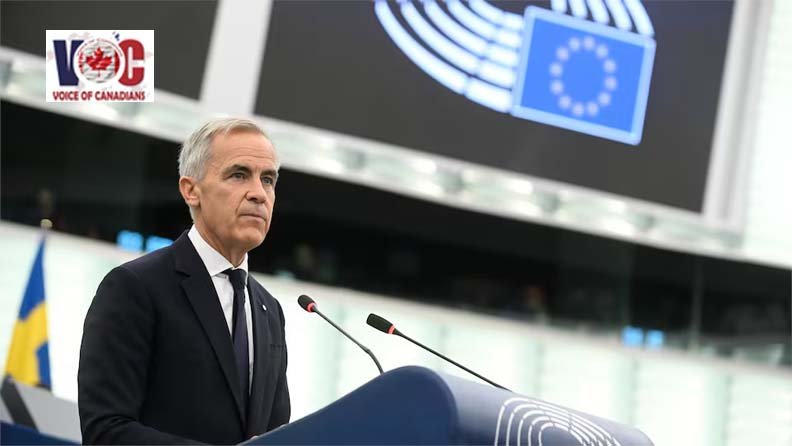
Prime Minister Mark Carney and European Commission President Ursula von der Leyen each gave speeches this week that provide more detail about a new partnership between Canada and the EU — but there is still much left to be hammered out.
Here’s what we know about the pitch for Canada to become the European Union’s first associate member — or what Carney prefers to call an alliance for the future.
The CBC’s readers, viewers and listeners have been very interested in the details, and the questions below partially reflect those sent to CBC’s inbox over the last several days.
What questions do you have about the proposed partnership between Canada and the EU? Send them to ask@cbc.ca.
Is Canada planning to join the EU?
Not as a full member, Carney has said repeatedly, going back more than a year.
But during his speech before the European Parliament in Strasbourg, France, on Thursday, Carney said he welcomes the ambition of von der Leyen’s proposal that Canada become the EU’s first associate member of the 27-nation bloc.
What is an ‘associate’ member?
Nobody knows for certain yet. Associate member is not a legal designation, though various versions of an associate-type membership have been floated over the years, including a recent proposal for Ukraine (new window) that did not gain traction.
A senior Canadian official, who offered information to CBC News on a not-for-attribution basis, said the associate member label is one of a few that have been considered and that Canada did not propose it.