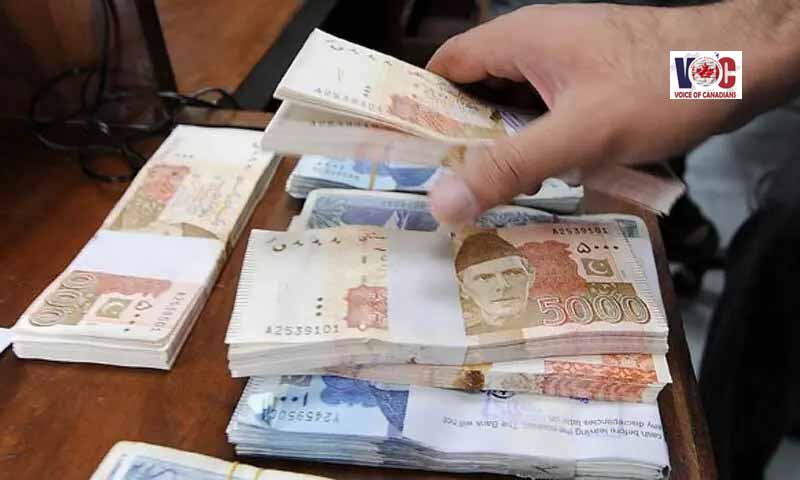

Pakistan’s remittance story is no longer a marginal economic footnote. It is one of the country’s central macroeconomic pillars. Workers’ remittances rose to $41.58 billion in FY2026 from $38.30 billion in FY2025, registering an 8.6% year-on-year increase.
Monthly inflows remained above $3 billion throughout the year and touched $4.25 billion in May 2026. In an economy repeatedly constrained by weak exports, low foreign direct investment, narrow fiscal space and recurring balance-of-payments pressures, this inflow has become an indispensable source of stability.
Yet the very strength of remittances also raises a more difficult question: are we using this lifeline merely to survive or can we convert it into a long-term development instrument? The state must ask how these inflows can be channeled from household relief into savings, investment, employment and productivity.
In the household income, the share of remittance is not significant. According to HIES 2024-25, remittances account for 7.77% of monthly household income nationally. However, their weight varies sharply across provinces. In Khyber-Pakhtunkhwa, they make up 18.22% of monthly household income, compared with 8.01% in Punjab, 1.34% in Sindh and only 0.90% in Balochistan. These differences reflect migration networks, labour-market access and the uneven spread of financial infrastructure.