Iranian President’s Key Visit to Pakistan Sparks New Hope for Regional Peace
Report: Mehboob Ali Shaikh
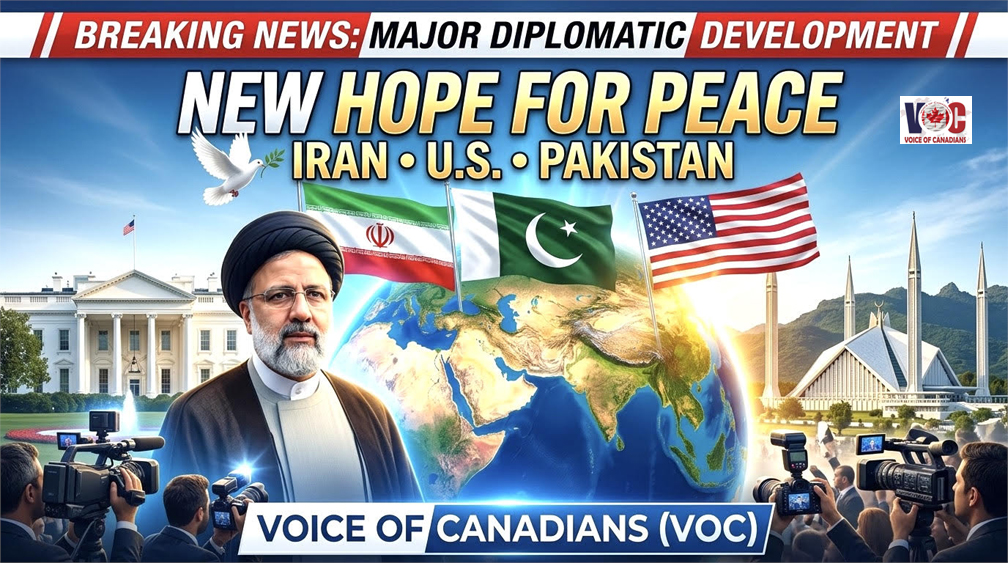
Iranian President Masoud Pezeshkian has arrived in Pakistan as negotiations continue over achieving a lasting end to the conflict between Iran and the United States. During meetings with Pakistan’s leadership in Islamabad, discussions focused on regional peace, economic cooperation, and the situation in Lebanon.
At the same time, differences have emerged between the two sides regarding nuclear inspections and the use of frozen Iranian assets.
According to analysts, if current diplomatic efforts succeed, the Middle East could enter a new era of peace. However, tensions in Lebanon, the role of Hezbollah, and issues surrounding the nuclear program continue to be viewed as major challenges.
As efforts continue to reach a permanent end to the conflict that began last year between Iran and the United States, Iranian President Masoud Pezeshkian arrived in Pakistan on Tuesday and held meetings with President Asif Ali Zardari, Prime Minister Shehbaz Sharif, and other senior officials.
The visit comes at a time when technical teams are reportedly working to finalize the details of a long-term peace agreement following high-level negotiations held in Switzerland.
Pakistan and Qatar are currently playing an important mediating role between Iran and the United States. Meetings in Islamabad included detailed discussions on regional peace, economic cooperation, border stability, and post-conflict conditions.
Iranian Foreign Minister Abbas Araghchi also accompanied the delegation, further highlighting the diplomatic importance of the visit.
One major issue in the negotiations involved inspections of Iran’s nuclear facilities. U.S. Vice President JD Vance had claimed that Iran had expressed willingness to allow the International Atomic Energy Agency (IAEA) to inspect facilities affected by bombing.
However, Iranian Foreign Ministry spokesperson Esmaeil Baghaei rejected the claim, stating that no schedule had been agreed upon for such visits.
Talks in Switzerland also included special arrangements aimed at keeping the Strait of Hormuz open. The strategic waterway is considered vital for global energy supplies and had reportedly faced restrictions during the conflict.
Although maritime activity is gradually resuming, questions remain over who will oversee and secure this sensitive route in the future.
Meanwhile, renewed violence has been reported in southern Lebanon. Two people were killed in Israeli military fire, with Israel claiming those killed were linked to Hezbollah.
The incident occurred only days after a ceasefire had taken effect. Analysts warn that if large-scale fighting resumes in Lebanon, it could undermine the ongoing diplomatic process between Iran and the United States.
Following the initial negotiations in Switzerland, both sides reportedly agreed to a 60-day diplomatic framework aimed at developing a comprehensive agreement for ending the conflict.
Under this framework, separate working groups are expected to address major issues including Lebanon’s situation, economic sanctions, the nuclear program, reconstruction efforts, and regional security.
U.S. Vice President JD Vance stated that if Iranian financial assets are restored, they could potentially be used to purchase American corn, wheat, and soybeans.
Iranian officials responded by emphasizing that Iran alone will decide how its financial resources are used and that it would not require outside approval.
Iran’s Ambassador to Geneva, Ali Bahraini, stated that Iran remains the sole owner and decision-maker regarding its assets. Tehran has also made clear that a complete ceasefire in Lebanon must be an essential part of any broader peace agreement.
Meanwhile, Israeli Prime Minister Benjamin Netanyahu stated that Israeli forces would retain full operational freedom in Lebanon, raising new questions about the future of peace negotiations.
Experts believe that if Iran, the United States, Pakistan, Qatar, and other regional powers succeed in their current diplomatic efforts, the Middle East could move toward a more stable and lasting peace for the first time in years.
However, sensitive issues—including nuclear inspections, the situation in Lebanon, Hezbollah’s role, and the use of frozen assets—remain unresolved.