New law aims to protect young people from online harms, mental health pressures, cyberbullying, inappropriate content, and digital addiction
By Mehboob Ali Shaikh
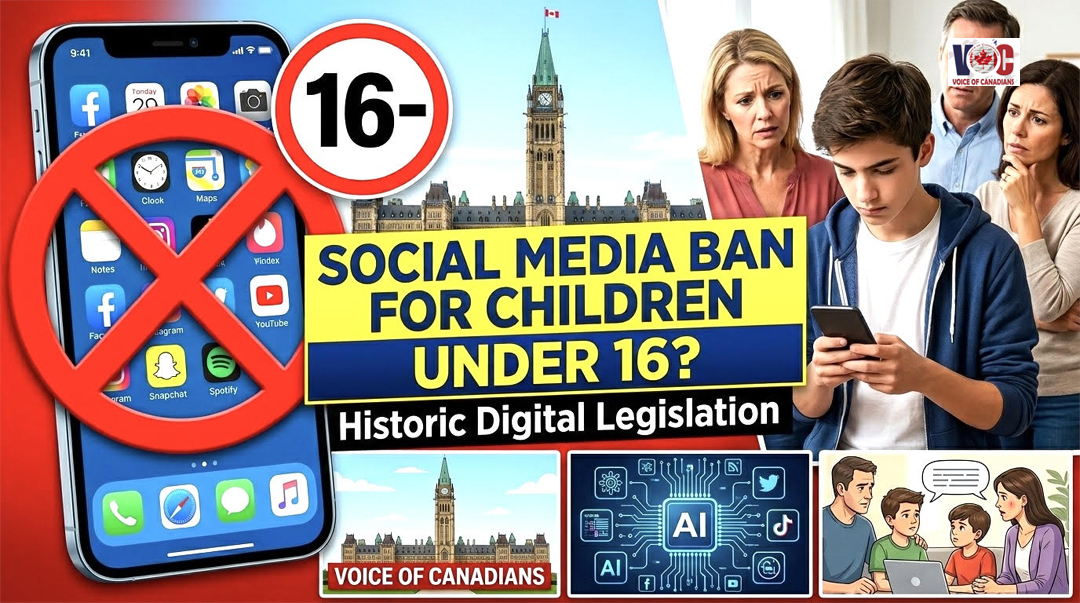
The Canadian federal government is preparing to introduce a major Online Safety Bill in Parliament that could restrict access to social media platforms for children under the age of 16. The proposed legislation is designed to protect young people from online harms, cyberbullying, mental health challenges, and exposure to unsafe content.
According to reports, the comprehensive bill, expected to be tabled this week, would establish new safeguards for minors in the digital environment. The government says the legislation is intended to address growing concerns about the impact of excessive social media use on children and teenagers.
For several years, psychologists, parents, health organizations, and school boards across Canada have expressed concern over rising screen time among youth. In particular, school boards and health agencies in Ontario have repeatedly warned that unrestricted social media use can negatively affect young people’s mental health, sleep patterns, academic performance, and social behavior.
The proposed legislation will extend beyond social media platforms and introduce a clear legal framework for artificial intelligence (AI)-powered chatbots. While AI chatbots would not be banned, their operators would be required to meet strict obligations related to child safety, transparency, and the prevention of harmful content.
Canada is not alone in pursuing such measures. Australia has already implemented restrictions on social media access for children under 16, while countries including France, Denmark, Greece, Spain, the United Kingdom, and others are considering or developing similar legislation. Governments around the world are increasingly placing greater responsibility on technology companies to protect children from online risks.
One notable feature of the proposed law is that social media platforms may apply for a government exemption if they can demonstrate that their services effectively protect younger users. This suggests the government is seeking to strike a balance between safety, innovation, and accountability rather than imposing an absolute ban.
If passed, the legislation could significantly affect thousands of families across Canada, including in Toronto and other major cities. Parents may face new responsibilities regarding their children’s online activities, while schools could be required to strengthen digital literacy and online safety programs.
Surveys and public opinion data indicate that a substantial portion of Canadians support stronger regulations—or even restrictions—on social media use by young people. Critics, however, argue that parental supervision, digital education, and improved platform design may be more effective solutions than outright bans.
The development is particularly significant because an earlier attempt at online harms legislation failed to complete the parliamentary process in 2025. The federal government is now returning with a broader approach and expanded regulatory powers.
The proposed law will also introduce new responsibilities for AI chatbot operators while providing a pathway for safer platforms to obtain government exemptions. If approved, it could mark a historic shift in Canada’s digital policy and online safety framework.