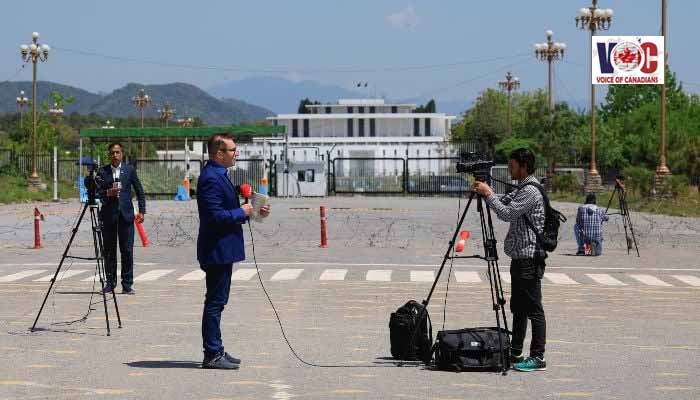
ISLAMABAD: Delegations from the United States and Iran have begun high-level negotiations in Islamabad aimed at strengthening a fragile ceasefire and exploring the possibility of a broader peace agreement.
Hosted by Pakistan, the talks are centred on two competing proposals — a 15-point framework from the United States and a 10-point plan from Iran — with both sides maintaining sharply differing positions on key issues.
At the core of the discussions is Iran’s nuclear programme. The United States is seeking strict limits on uranium enrichment and enhanced international monitoring, while Iran insists its nuclear activities are peaceful and must be recognised as part of its sovereign rights.
Sanctions relief remains another major sticking point. Tehran is demanding the immediate lifting of restrictions and the release of frozen assets, whereas Washington is reportedly pushing for a phased approach linked to compliance on nuclear and security commitments.
The future of the strategically important Strait of Hormuz is also under discussion, with Iran seeking greater regulatory recognition over the waterway, while the US is advocating unrestricted global shipping access.
Regional security issues, including Iran’s ties with allied armed groups and the presence of US forces in the Middle East, have further widened differences between the two sides. Iran is also calling for guarantees of non-aggression, while the US is emphasizing security commitments to its allies.
Discussions have also touched on Iran’s missile programme, with Washington seeking limitations, and Tehran maintaining it as a key element of its defence policy.
While no immediate breakthrough is expected, officials indicate that talks may continue beyond the current ceasefire period, with early progress likely to focus on confidence-building measures.