The conflict between the United States, Israel and Iran continued to escalate Tuesday, with fresh military strikes, rising casualties and mounting diplomatic fallout across the Middle East.
US President Donald Trump suggested that leadership in Tehran could ultimately pass to “someone from within” the Iranian regime once Washington’s military campaign concludes. At the same time, he urged Iranian protesters to hold off on immediate action, despite previously encouraging public resistance.
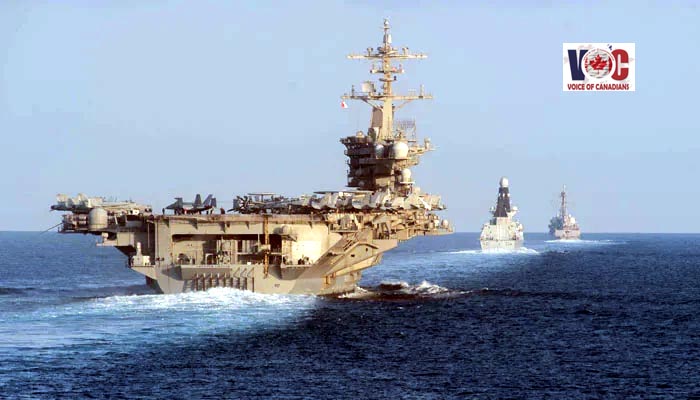
Speaking at a public event, Trump outlined four objectives for what the administration has termed Operation Epic Fury: dismantling Iran’s missile capabilities, destroying its naval assets, preventing Tehran from acquiring nuclear weapons and halting its support for armed groups beyond its borders. He described the operation as progressing “ahead of schedule,” though senior military officials cautioned that the campaign would require time and could result in additional American casualties.
The Pentagon confirmed that six US service members have now been killed in action. According to US Central Command, the remains of two previously unaccounted-for troops were recovered from a facility struck during Iran’s initial retaliatory attacks.
Heavy Casualties Across the Region
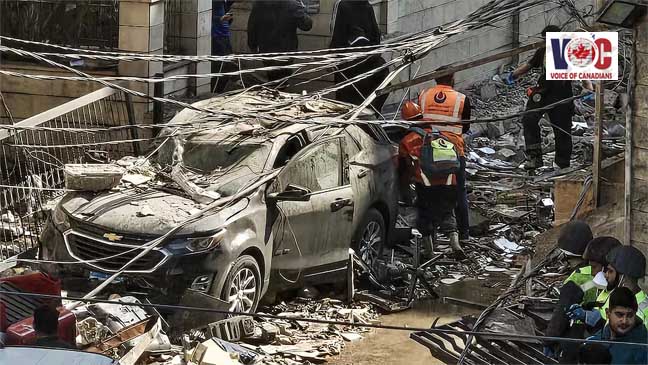
The humanitarian toll continues to mount. The Iranian Red Crescent Society reported that 787 people have been killed in Iran since hostilities began. Iranian state media aired footage of what it described as a large funeral procession in the southern city of Minab following a strike on a primary school. Local outlets claimed significant child casualties, though those figures have not been independently verified.
The United Nations High Commissioner for Human Rights called for an impartial investigation into the school strike, warning that deliberate or indiscriminate attacks on civilians could constitute war crimes.
Elsewhere in the region, at least 52 people were killed in Israeli airstrikes in Lebanon, according to officials there, after Hezbollah launched missiles and drones toward Israel. The Israeli military said it had targeted and killed the head of Hezbollah’s intelligence unit in Beirut. Israeli authorities indicated they are not currently considering a ground invasion.
Eleven people have been reported killed in Israel amid Iranian retaliatory attacks, while six US soldiers have died in the broader campaign.
Strait of Hormuz Crisis
Iranian state media quoted a Revolutionary Guard commander as declaring the Strait of Hormuz closed, threatening to set ablaze any vessel attempting passage. Approximately one-fifth of global oil consumption flows through the strategic waterway between Iran and Oman.
Shipping industry executives estimate that nearly 10 per cent of the global container fleet is currently caught in the disruption. Maritime insurers have reportedly withdrawn coverage for voyages through the strait, compounding fears of prolonged energy market instability.
Canada Tracks Citizens in Region
In Ottawa, Global Affairs Canada confirmed that more than 97,000 Canadian citizens and permanent residents in the Middle East have registered with the department — an increase of 12,000 in recent days. Officials said they are not aware of any Canadian deaths or injuries linked to the hostilities.
Lebanon and the United Arab Emirates account for the largest numbers of registered Canadians in the region. Nearly 3,000 are registered in Iran.
The federal government has secured a limited number of seats on a commercial flight from Beirut to Istanbul, to be allocated on a first-come, first-served basis. Canadian officials have also dispatched a small consular team to Van, Turkey, near the Iranian border, to assist citizens exiting through land crossings.
Meanwhile, Washington said it is arranging military and charter flights to evacuate American citizens from the region.
Energy and Political Implications
Amid the turmoil, Canada’s Energy and Natural Resources Minister Tim Hodgson said the crisis underscores Canada’s growing strategic importance as a stable energy supplier.
Speaking in Toronto following an address at the Prospectors & Developers Association of Canada conference, Hodgson said allied nations increasingly view Canada as a predictable and values-based producer of energy and critical minerals.
The minister said Ottawa is accelerating investment in domestic mining projects and critical mineral supply chains, positioning Canada as a reliable alternative amid global instability. He emphasised that Canada would not weaponize its natural resources for political leverage.
Shifting Narratives in Washington
The rationale for the US campaign has drawn scrutiny after seemingly conflicting explanations from senior officials. Secretary of State Marco Rubio initially suggested the strikes were pre-emptive responses to anticipated Israeli actions that could trigger attacks on US forces. Trump, however, later said Israel had not influenced his decision and claimed he believed Iran was preparing to strike first.
Critics argue the mixed messaging may complicate efforts to rally domestic support for a sustained military campaign.
Regional Stability Tested
The violence has rattled Gulf states that have long projected stability as a cornerstone of their economic model. In the United Arab Emirates, business leaders report widespread disruption, with flights grounded and corporate events cancelled during the traditionally busy Ramadan period.
As hostilities persist and diplomatic solutions remain elusive, governments across the region and beyond are bracing for further escalation — with no clear indication yet of how long the conflict may endure.