
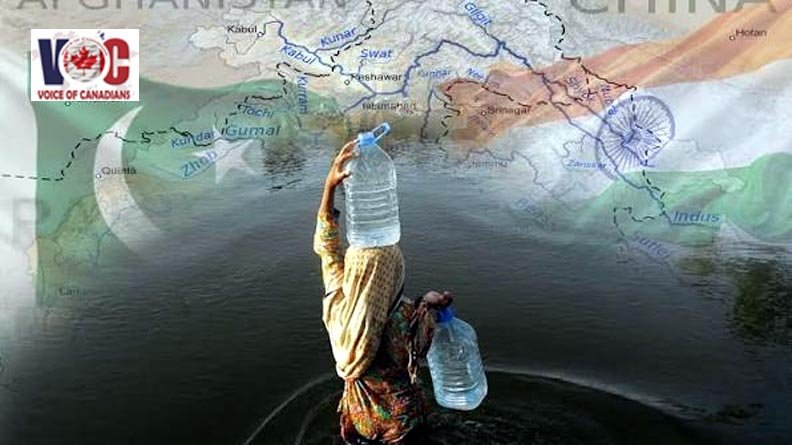
THE Indus Waters Treaty (IWT) of 1960 has long been heralded as one of the most durable water-sharing agreements in history. Despite multiple wars and decades of profound political animosity between India and Pakistan, the IWT managed to survive, providing a fragile framework for regulating the shared waters of the Indus River system.
However, the delicate equilibrium of this treaty has been shattered. The move by India to place the IWT in abeyance is not merely a diplomatic protest; it represents a fundamental strategic pivot.
In an era increasingly defined by climate change and existential resource competition, the suspension of the IWT signals a shift toward a new, perilous world order where water security dictates state survival, and historical norms are rapidly eclipsed by the “law of the jungle.”
To understand the severity of the hydro-political reality of scarcity, one must look beyond the immediate geopolitical friction and consider the changing hydrology and demography of the region. Climate change is rapidly altering the cryosphere of the Himalayas, which feeds the Indus basin. Glacial retreat, erratic monsoon patterns, and severe, prolonged droughts are making water availability increasingly unpredictable.
The World Resources Institute (WRI) provides a stark warning in its Aqueduct Water Risk Atlas, mapping a future where water becomes the most prized — and contentious — resource on the planet. According to WRI projections, vast swathes of the globe, including South Asia, face escalating levels of baseline water stress. By mid-century, trillions of dollars in GDP will be exposed to high water risk as demand drastically outstrips renewable supply. In such a landscape, water is no longer just an environmental issue; it is a fundamental driver of national security.
As resources diminish, states are becoming increasingly inward-looking. The international order, which once placed a premium on cooperation, is giving way to a more ruthless framework where states prioritise their own existential needs above collective agreements.
In this light, placing the IWT in abeyance is not a temporary diplomatic manoeuvre; it is a strategic preparation of the ground for an eventual unilateral withdrawal.
As water scarcity increases, the temptation for an upper-riparian state to leverage control over water flows to secure its own agricultural and energy requirements becomes overwhelming, effectively treating the resource as sovereign property rather than a shared heritage.