OTTAWA — Experts in European Union policy say Canada should try solidifying gains with the EU in legal frameworks, particularly as talk of becoming an EU “associate member” continues to cause confusion.
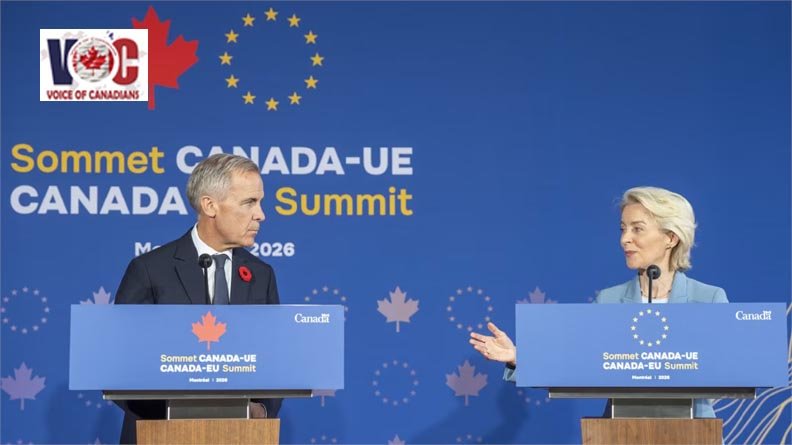
Academics studying EU relations testified Monday to the House foreign-affairs committee, after a summit in Montreal last week.
Canadian and European officials praised the plan as a historic partnership. The experts were less enthusiastic.
“A lot of these agreements are essentially expressions of intent, more than anything,” University of Toronto professor Mark Manger testified.
“I’m still waiting for a concrete announcement, of something that is more than more co-operation, better relations, etc., etc.,” he said.
Manger argued Mexico already has many of the arrangements with the EU that Canada is now gaining or seeking.
The testimony comes after weeks of confusion over nomenclature, with European Commission President Ursula von der Leyen pitching Canada become an “associate member” of the EU.
Prime Minister Mark Carney originally avoided that phrasing for weeks and instead spoke of an “alliance for the future.” He switched last Thursday, saying the goal was associate EU membership — a term that has no official definition.