Sometimes the symbolism surrounding a summit says as much as the substance of the talks. The arrival of Chinese President Xi Jinping in Washington last week was one such moment. When Xi’s aircraft landed at Joint Base Andrews, a red carpet was rolled out. President Donald Trump himself went to the tarmac to receive his Chinese counterpart. The ceremony included a guard of honour, military bands, national anthems, a 21-gun salute and a flypast by US bombers and fighter jets. American presidents do not normally receive foreign leaders at the airport. The White House is traditionally where such honours are performed. That made Trump’s decision to personally welcome Xi particularly significant.
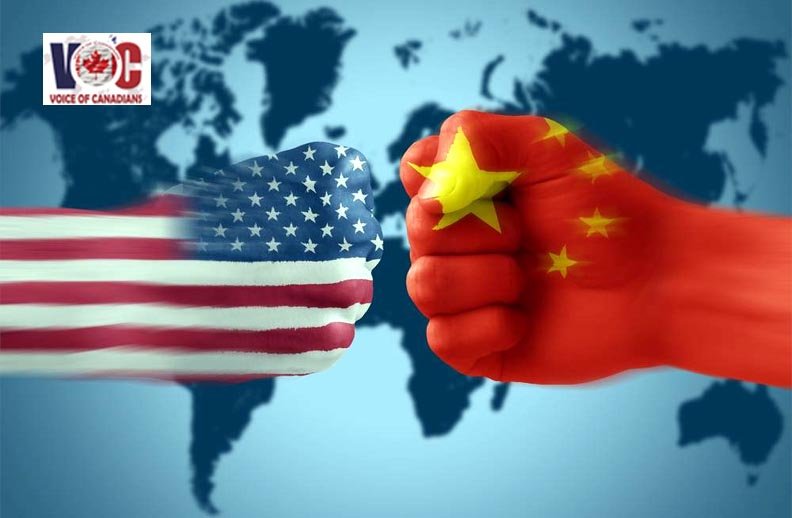
The images from Andrews offered perhaps the clearest indication yet that an old question in international politics is becoming increasingly irrelevant: can China catch up with the United States? China is no longer simply a country trying to catch up with America. It has emerged as a superpower in its own right. Xi’s visit was his first trip to Washington in more than a decade. The last Chinese leader to make a state visit was Xi himself in 2015, when Barack Obama was president. A great deal has changed since then. The China that Xi represented in Washington in 2015 was already a rising power. The China arriving in Washington in 2026 is something different: a country with enormous economic weight, advanced technological capabilities, a rapidly modernising military and a global diplomatic footprint. This is why the optics of the Andrews reception deserve attention.
For years, much of Washington’s China policy was built around the idea of containing, constraining or slowing Beijing’s rise. Trade restrictions, technology controls, military alliances and strategic partnerships in the Indo-Pacific were all part of an effort to preserve America’s lead. But there is a fundamental difference between containing a rising power and managing a relationship with an established superpower. The latter appears to be increasingly unavoidable. That does not mean the strategic competition between Washington and Beijing has disappeared. Far from it. Trade, AI, advanced technology, Taiwan and security remain deeply contentious. The two countries are still competing for influence and technological advantage.