
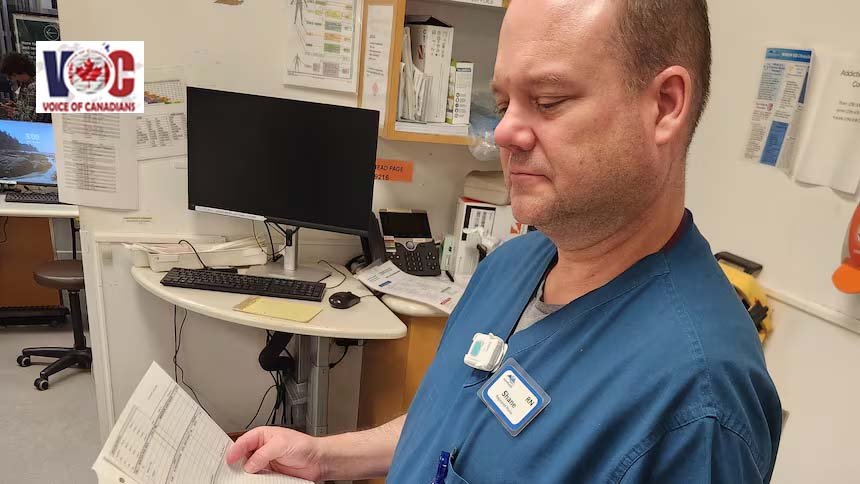
Registered nurse Shane Tyson was done with the U.S.
He was working in Minnesota at the not-for-profit Mayo Clinic Health System and the Olmsted Medical Center. But in 2025, Tyson says he became increasingly concerned about the deterioration of health care, as well as tighter immigration enforcement.
Then ICE agents arrested a patient as they were leaving a primary care appointment where he worked, Tyson says.
“That was definitely a wake-up call,” he said. “And I am married to a U.S. permanent resident that was born in Bolivia … and it scared the crap out of me for him and for the others in that situation,” Tyson told Dr. Brian Goldman, host of CBC’s White Coat, Black Art.
Tyson says he’d been noticing Facebook ads from provincial recruitment service HealthMatch BC. The more he researched, the more he contemplated a move north. So he registered, got interviews with two B.C. health authorities, and received two job offers within a week.
Tyson is one of many health-care professionals making the move from the U.S. With shortages of nurses, physicians and other health workers, some provinces are actively recruiting U.S. health-care professionals — and they’re getting results.
CBC reached out to health ministries in all 10 provinces for data on health-care professionals recruited from the U.S. since efforts ramped up in 2025.
The number of doctors recruited ranged from three in Saskatchewan to 33 in Nova Scotia and 570 in Ontario.
Ontario also recruited 2,300 nurses in 2025, while, all told, more than 580 health-care professionals accepted jobs in B.C. since March 2025.
For Tyson, the targeted recruitment worked. It took him just three months to get his B.C. nursing licence through a fast-track process, and eight days to receive a provincial nomination for permanent residence.
Since January, he’s been working in the emergency department of Nanaimo Regional General Hospital (NRGH) on Vancouver Island. Tyson says he’s pleased with the community, the weather, and what he sees as more inclusive health care.
“There’s not the insurance companies and corporate health-care companies taking billions of dollars. The patient is the focus here and whether you’re the unhoused or the banker or lawyer, you have equal access to care in Canada,” he said.