The Agreement Is Not Ending—The Future of North American Trade Will Now Be Decided Through Negotiations
Special Report by Mehboob Ali Shaikh
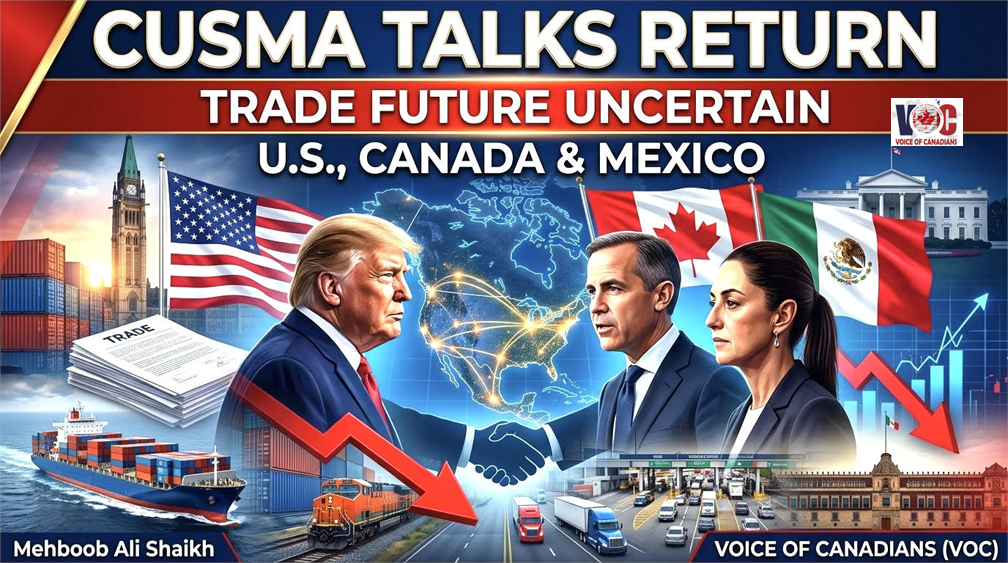
The United States has declined to renew the Canada United States–Mexico Agreement (CUSMA) in its current form. However, the agreement has not been terminated. Instead, it has automatically entered its annual review process, with Canada and Mexico reaffirming their commitment to continued negotiations while the United States seeks changes to address what it considers shortcomings in the agreement and its trade deficit.
Trade experts say the decision will not immediately disrupt commerce, but the negotiations in the coming months will be crucial in shaping the future of North America’s economy, investment climate, and employment opportunities.
The decision follows the United States’ refusal to extend the trilateral trade agreement in its existing form, triggering the treaty’s built-in annual review mechanism rather than a long-term renewal.
U.S. Trade Representative Jamieson Greer stated that Washington wants further discussions on perceived weaknesses in the agreement and the United States’ trade imbalance with Canada and Mexico. He emphasized, however, that the agreement remains fully in force and will continue to govern trade unless a new agreement is reached or the treaty is formally terminated.
Senior trade officials from Canada, the United States, and Mexico held a virtual meeting on Wednesday to discuss the future of the agreement.
Canada was represented by Dominic LeBlanc and Chief Negotiator Jean Charest, while Mexico also reiterated its support for maintaining and renewing the trade pact.
Canada once again expressed its desire to preserve CUSMA to ensure continued investment, job creation, and economic stability across North America.
Canada’s trade minister said that upcoming negotiations will address not only CUSMA but also U.S. tariffs on Canadian products. Discussions are expected to include tariffs affecting steel, aluminum, automobiles, and softwood lumber, all of which remain major issues in bilateral trade.
The original agreement was expected to receive a 16-year extension. However, because the United States declined to approve that extension, the agreement will now undergo annual reviews for approximately the next decade.
According to trade analysts, this does not mean trade between the three countries will stop. Instead, the parties will meet annually to evaluate the agreement’s performance, resolve disputes, and consider possible amendments.
Mexico’s Secretary of Economy Marcelo Ebrard said in a video statement that the agreement remains in effect and there is no reason for businesses or consumers to panic.
He also announced that bilateral meetings with U.S. officials will take place later this month in an effort to reduce uncertainty for key industries.
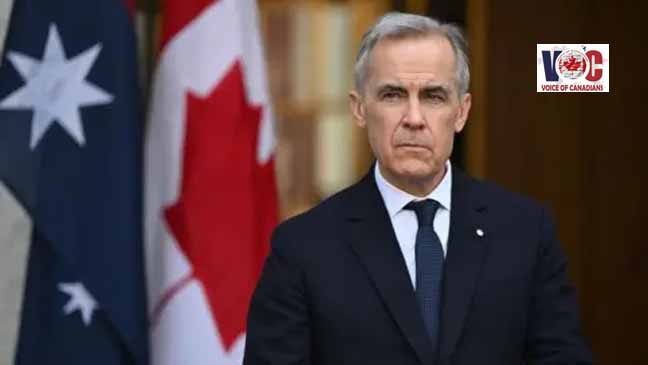
Canadian Prime Minister Mark Carney had already indicated that he did not expect any major breakthrough or dramatic announcement before the review deadline.
Meanwhile, U.S. President Donald Trump has repeatedly criticized CUSMA. Although he has previously expressed a desire to withdraw from the agreement, the current decision stops short of terminating the treaty and instead focuses on renegotiating its terms.
Trade experts believe the decision will increase uncertainty for investors and manufacturers. However, because CUSMA remains legally in force, the likelihood of an immediate trade crisis remains low.
Former Canadian Chief Negotiator Steve Verheul said future discussions are expected to focus primarily on bilateral trade disputes rather than sweeping changes to the core structure of the agreement.
If future negotiations fail, sectors that could be affected include automobile prices, manufactured goods, the steel and aluminum industries, cross-border trade, investment, and employment opportunities. For now, however, there is little expectation of immediate changes to everyday life, although businesses are closely monitoring developments and adjusting their long-term strategies.
This decision does not signal the end of North American trade. Rather, it marks the beginning of a new phase of negotiations.
While the United States is seeking to strengthen its negotiating position and secure more favorable terms, Canada and Mexico continue to push for long-term stability, certainty, and predictability in regional trade.
The negotiations in the months ahead will determine whether North America’s most important trade agreement emerges stronger than before—or becomes increasingly complex.