
By Mehboob Ali Shaikh
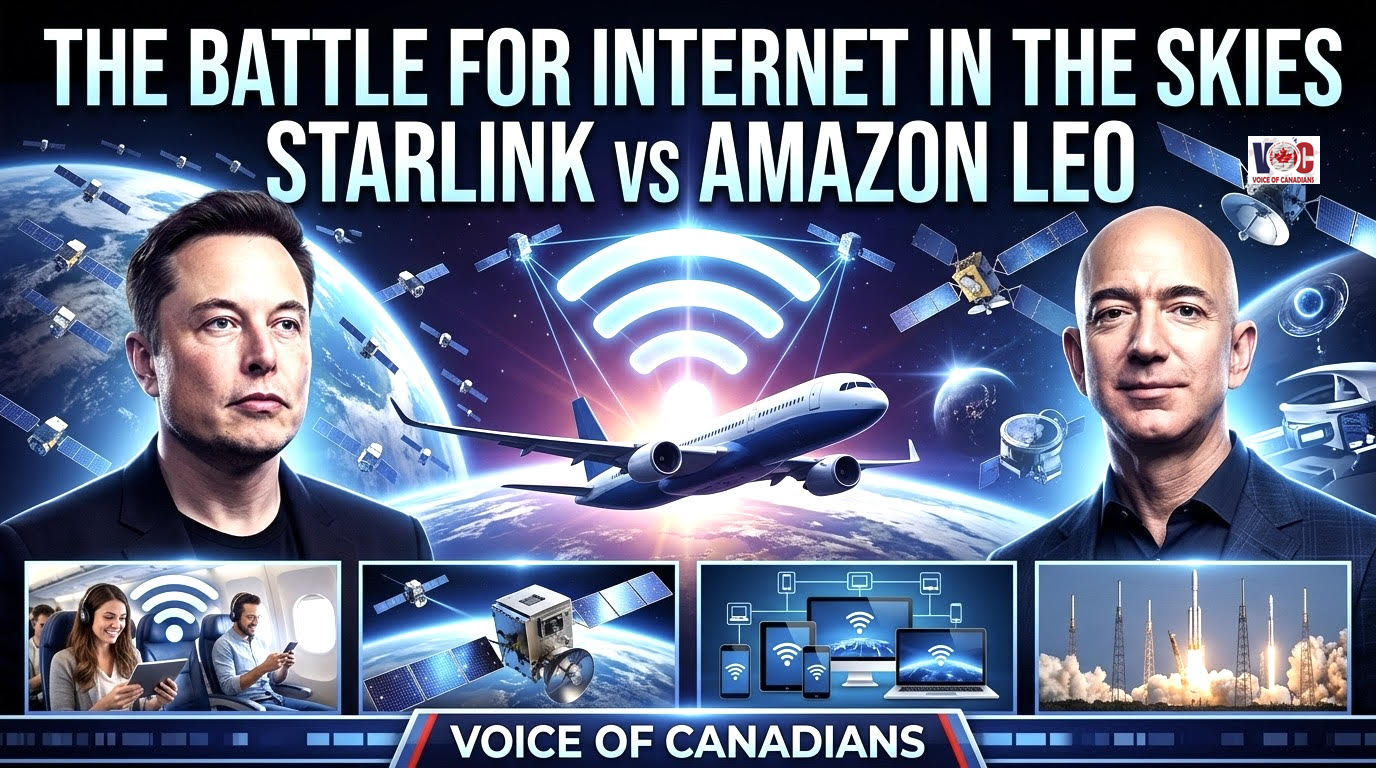
The race to dominate high-speed internet in the aviation industry is intensifying, with Elon Musk’s Starlink establishing a clear lead over Jeff Bezos’ Amazon Leo satellite network. During 2026 alone, Starlink has secured agreements with 11 additional airlines, while thousands of aircraft are already connected to its rapidly expanding network.
Airlines around the world are no longer competing solely on ticket prices, comfortable seating, or onboard meals. High-speed in-flight Wi-Fi has emerged as a major competitive advantage, placing two of the world’s most influential billionaires—Elon Musk and Jeff Bezos—at the center of a growing technological battle.
At present, SpaceX’s Starlink holds a significant lead in the aviation connectivity market, while Amazon is attempting to establish its presence through its Leo satellite broadband service.
According to aviation intelligence firm Valour Consultancy, Starlink added 11 new airline customers worldwide in 2026. This follows agreements with 22 airlines in 2025 and eight airlines in 2024, reflecting the service’s rapid expansion across the aviation sector.
Industry experts attribute Starlink’s success to its vast constellation of Low Earth Orbit (LEO) satellites, which provide significantly faster speeds and lower latency than traditional geostationary satellite systems.
For many years, in-flight internet was often criticized as expensive, slow, and unreliable. That perception is now changing. According to Decius Valmorbida, President of travel technology company Amadeus, high-speed internet is no longer considered a luxury but is increasingly becoming a basic requirement for airlines.
Airlines believe superior connectivity can attract premium passengers, strengthen loyalty programs, and create new revenue opportunities through digital services.
A Multi-Million-Dollar Investment
Installing satellite broadband systems such as Starlink or Amazon Leo is a major undertaking. Analysts estimate that equipping the entire American Airlines fleet with Starlink could cost between US$150 million and US$250 million, while annual service fees could exceed US$60 million.
These figures demonstrate the scale of investment airlines are willing to make in order to remain competitive in the future.
According to Lluc Palerm, an analyst at research firm Analysys Mason, the market for aviation Wi-Fi is likely to evolve into a major competitive battle between Starlink and Amazon Leo in the coming years.
Why Starlink Is Leading
For now, Starlink enjoys several significant advantages:
- More than 7,000 aircraft are already covered under Starlink-related agreements.
- Its satellite network is fully operational and globally established.
- Installation is relatively quick and straightforward.
- Airlines rarely switch providers once a connectivity system has been installed.
Amazon, meanwhile, is still in the process of building out its Leo satellite constellation. Some industry observers have also expressed caution following a recent Blue Origin rocket setback, which raised questions about the pace of Amazon’s deployment plans.
Despite these challenges, major airlines including Delta Air Lines and JetBlue Airways have already entered into agreements with Amazon Leo.
Amazon argues that its offering extends beyond internet connectivity. The company believes it can provide airlines with a comprehensive ecosystem that combines cloud computing, entertainment services, and retail solutions into a single integrated platform.
Industry Debate Continues
Not all airlines are convinced.
Ryanair Chief Executive Michael O’Leary has rejected the idea of adopting Starlink, arguing that the system’s cost and the additional weight of satellite antennas could increase fuel consumption and operating expenses.
His comments sparked a public exchange on social media between Ryanair and Elon Musk, highlighting the growing intensity of competition in the sector.
More Than Just Passenger Entertainment
For today’s airlines, high-speed internet is no longer limited to streaming movies or sending messages. It has become a strategic business tool that can:
- Enhance customer loyalty programs.
- Increase sales of credit cards and premium upgrades.
- Help airlines collect valuable passenger data.
- Maintain engagement with customers long after a flight has ended.
A 2025 study published in the Journal of Air Transport Management found that the availability of onboard Wi-Fi contributed to increased passenger demand on certain routes.
The Future of In-Flight Connectivity
At present, Starlink remains the dominant force in the aviation internet market and has become SpaceX’s largest source of revenue.
Of SpaceX’s reported US$18.67 billion in revenue during 2025, approximately US$11.4 billion came from Starlink alone.
However, given Amazon’s vast technological capabilities and financial resources, industry analysts believe the competition is far from over and is likely to intensify in the years ahead.
The aviation industry is entering a new era in which high-speed internet may become more important to passengers than comfortable seats or complimentary meals.
While Elon Musk’s Starlink currently holds a commanding lead, Jeff Bezos’ Amazon Leo remains a formidable challenger. The next few years will determine which company ultimately provides internet connectivity to millions of airline passengers around the world.
Experts agree that high-speed in-flight Wi-Fi is set to become a standard feature for every major airline. Although Amazon continues to expand through partnerships with carriers such as Delta and JetBlue, Starlink is currently viewed as the strongest force in the global aviation connectivity market.