Men’s health advocates are praising Ottawa’s decision to create Canada’s first ever men’s health strategy. But they also say improving men’s health will take more than a one-off strategy.
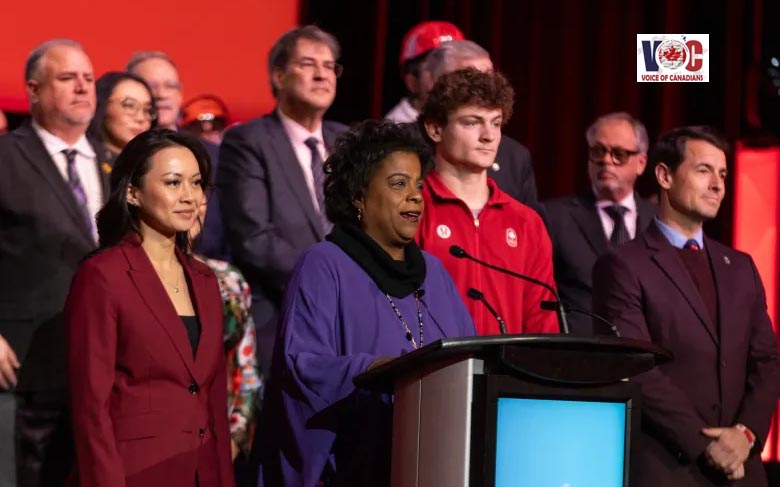
On Feb. 23, Health Minister Marjorie Michel announced the launch of an online survey to hear what Canadians think a men’s health strategy should include. The survey will run from March 2 to June 1.
“We can only build Canada strong with healthy Canadians,” Michel said at a press conference.
Men’s health advocates have long called for a men’s health strategy.
“There’s a genuine excitement,” said Justin Trottier, national executive director of the Canadian Centre for Men and Families, a national charity. The organization has spent years urging Ottawa to focus more on boys’ and men’s needs.
But Trottier says a strategy will need sustained attention to make a difference.
“[U]nless there’s a standing body pushing this thing through and then pushing for legislative action following the outcome of the strategy, I think it’s easy for other priorities or other issues to distract us,” he said.
‘Obvious’ problems
Michael Atkinson, a kinesiology and physical education professor at the University of Toronto, says the crisis in boys’ and men’s health is “obvious.”
“You can’t see the number of boys who literally drop out of society and stay in their parents’ bedrooms and have high levels of depression and anxiety, and think, ‘Hey, this is normal,’” said Atkinson, who has researched men’s health for 30 years.
Data support this claim.
During the 2023-2024 school year, 15 per cent of men in their 20s were so-called “NEETs” — not in employment, education or training.
There is also a significant gender imbalance in higher education. In 2023, women accounted for 60 per cent of bachelor program graduates, and 57 per cent of master’s program graduates.
Canadian men are also three times more likely than women to die by suicide.
At the press conference, Michel said she was prompted to prioritize men’s health after hearing stories about struggling men and boys in every community she has visited as health minister.
The strategy is not the only way the federal government is focusing on men’s health. Several members of Parliament and Senators have also formed a men’s health caucus.
The caucus, which has more than 20 members, includes Conservatives, Liberals and NDP and men and women.
Independent Senator Patrick Brazeau, one of the caucus organizers, told Canadian Affairs that men need the “same dedicated support” that women have received for their mental health.
“Healthier men mean healthier families, communities, workplaces, and a healthier Canada. We are all in this together, and there is no time to lose,” Brazeau’s office said in an emailed statement.
‘Inclusive’ priorities needed
Australia, Ireland and the U.K. already have strategies or action plans focused on improving men’s physical, mental and social well-being.
Ottawa has not announced specific priorities for Canada’s men’s health strategy.
Trottier, at the Canadian Centre for Men and Families, says his organization will be pushing for a “very inclusive strategy.”
This means addressing how family breakdown can affect men’s health. The centre runs shelters for men fleeing domestic violence and regularly works with men who are recently separated or divorced.
“If we’re going to be serious about all aspects of men and boys’ health, then we can’t ignore these areas just because they’re a little bit more edgy or they’re a little bit more politically complicated,” he said.
“These are actual drivers of men and boys experiencing negative health outcomes.”
John Oliffe, lead researcher at the University of British Columbia’s Men’s Health Research program, says he is “buoyed” by Ottawa’s announcement.
“I think it’s really positive for the country,” he said.
The strategy needs to address emerging concerns, he says, such as the popularity of online gambling and social media harms.
No ‘magic wand’
Atkinson, at the University of Toronto, has “measured skepticism” about the impact of a national men’s health strategy. Improving men’s health means addressing cultural attitudes that make men fear people will see them as weak if they ask for help.
Changing that requires more than a strategy.
Men’s health involves every facet of society, he says. It needs to begin with teaching young boys about health and taking their concerns seriously.
It means encouraging injury recovery in sports and time off work to care for physical and mental health. This matters especially now as governments prioritize skilled trades.
“It’s really about creating a culture where we say it’s not a weakness to say, ‘I need some help.’
“And that’s the fullest spectrum of help from, ‘I think I have a broken finger and I’m just not going to go to the doctor, because it’ll just sort itself out,’ to complex mental health issues.”
Oliffe agrees that the strategy needs to focus on health promotion.
“I don’t think we should be talking about help seeking,” he said. “I think we should be talking about health seeking.”
Researchers have studied men’s health and the barriers to it for decades, Atkinson adds. The problems are well-known. The government must do more than replicate past research.